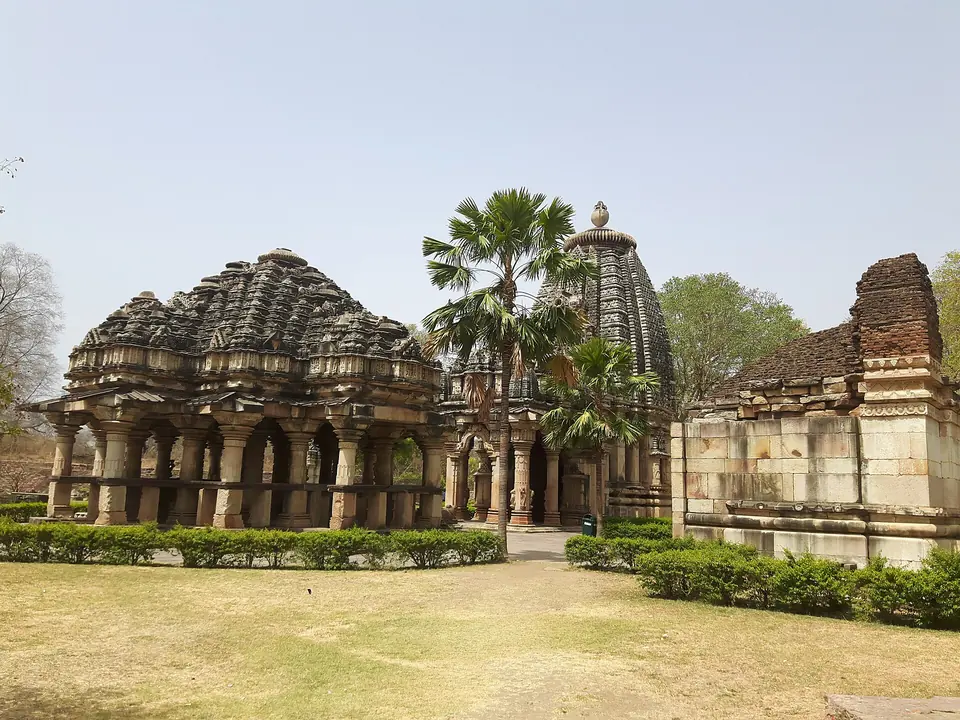
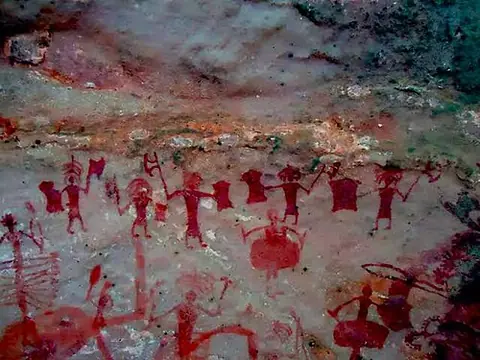
Red ochre rock paintings of human figures from the Chambal valley
Rock paintings, Chambal valley. Photo: Mainaksinghabarma, CC0

Prehistory

Rock paintings of the Chambal valley

Darrah · Gaipernath · Garadiya · Jawahar Sagar · KolipuraUNESCO Tentative List, 2024

People have sheltered under the overhangs of the Mukundara hills and the Chambal gorge for tens of thousands of years, and left their mark in red and white. Painted shelters are known along the Chambal hills and at Narsinghi Mataji, Jawahar Sagar dam, Gaipernath, Garadiya Mahadev, Darrah and the “Dakan ka Tol” near Kolipura.

In February 2024 the Rock Art Sites of the Chambal Valley — including several of these — were placed on UNESCO's Tentative List for World Heritage. The paintings run from Mesolithic hunting and gathering scenes through Chalcolithic cattle to later religious symbols.

Most shelters are in protected forest and unsigned. Visit only with a knowledgeable guide, and never touch, wet or trace the paintings.
Research: archaeology & rock art →

Visiting the rock shelters. Most painted shelters are in protected forest, unsigned and reached on foot, so go with a knowledgeable local guide and the forest department's permission. The best months are October to March, in the morning light. Never touch, wet, chalk or trace the paintings, and don't share exact locations online. We can help you arrange a guided rock-art visit — or call/WhatsApp +91 77373 39915.
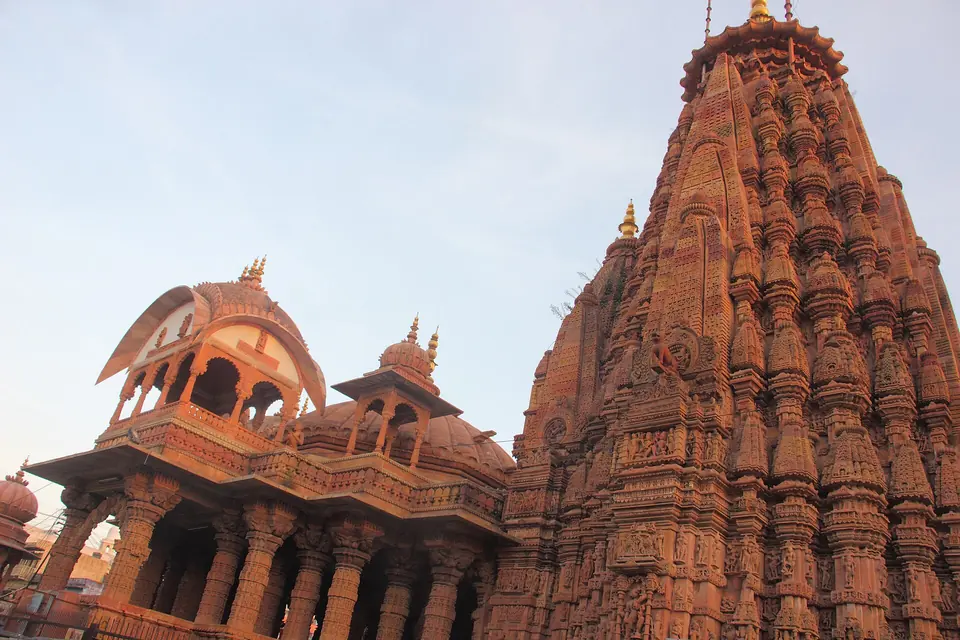
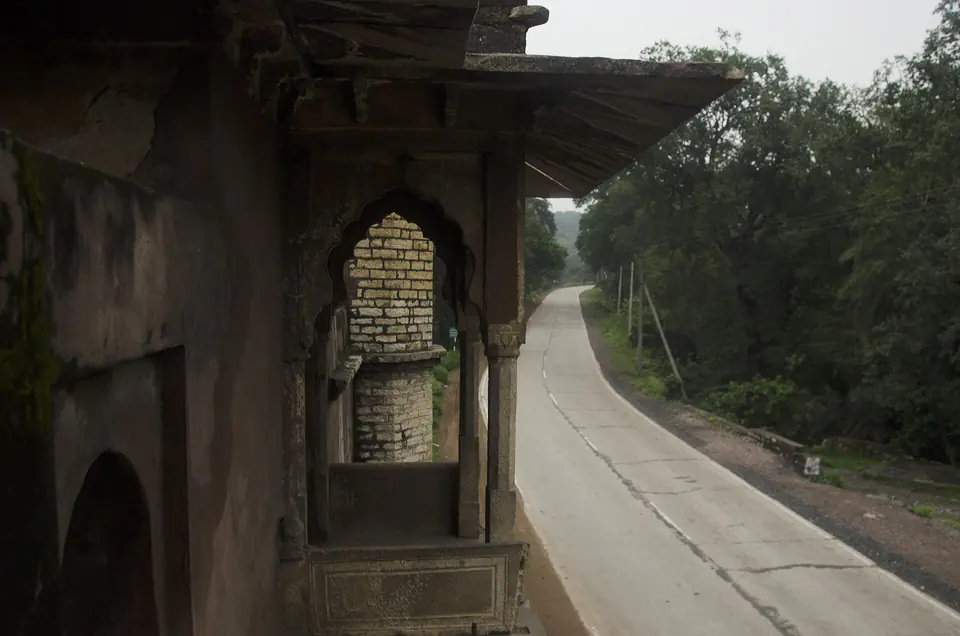
Arched window of Abli Meeni Mahal above the road at Darrah
Abli Meeni Mahal, Darrah. Photo: Siddharth 36, CC BY-SA 4.0

History at the safari gate

Darrah: Bhim ki Chauri, Abli Meeni Mahal & the hunting palaces

≈ 50 km from Kota, NH-52ASI monument N-RJ-96

Bhim ki Chauri — legend makes it the wedding pavilion of the Pandava hero Bhima, but it is the ruin of a mid-to-late 5th-century temple built under the Guptas or their Aulikara feudatories. Much of it was dismantled in the 17th century to build a nearby mansion; surviving sculptures, including a gana and a drummer, are in the Government Museum, Kota.

Abli Meeni Mahal — a small hilltop palace built by Rao Mukund Singh of Kota for Abli Meeni of Khairabad, often confused with the Darrah Mahal, Rao Mukund's hunting palace in the pass below. He loved these hills so much that they took his name: Mukund-darra, today's Mukundara.

Nearby, Maharao Ram Singh I built the Rawatha palace and the Ramsagar tank, with separate hunting towers for men and women.

Read the full history (Hindi)

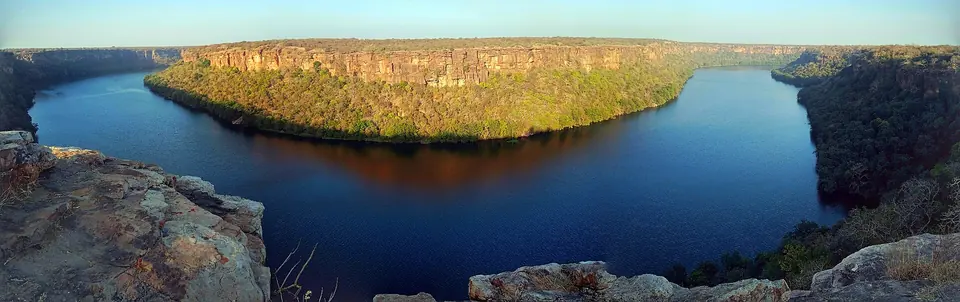
The Chambal river in a horseshoe bend below Garadiya Mahadev
The horseshoe bend below Garadiya Mahadev. Photo: Vishalamu81, CC BY 4.0

Chambal gorge viewpoint

Garadiya Mahadev

≈ 25–30 km from KotaForest check post · entry feeReported 7:00–17:30

The most famous view in Hadoti: from a rock ledge the Chambal swings through a near-perfect horseshoe some 300 feet below, walled by sandstone cliffs and dhok forest. A small Shiva shrine gives the place its name.

Garadiya lies inside Mukundara Hills Tiger Reserve, reached by a turn off the Kota–Chittorgarh highway (NH-27) and a forest check post where entry tickets are sold; a 1.2 km track leads to the viewpoint. Go at sunrise or late afternoon for light and vultures on the thermals, and in the monsoon for a green, cloud-wrapped gorge. A new safari route from Daulatganj to a Chambal viewpoint here is being developed.

Garadiya on the trails page

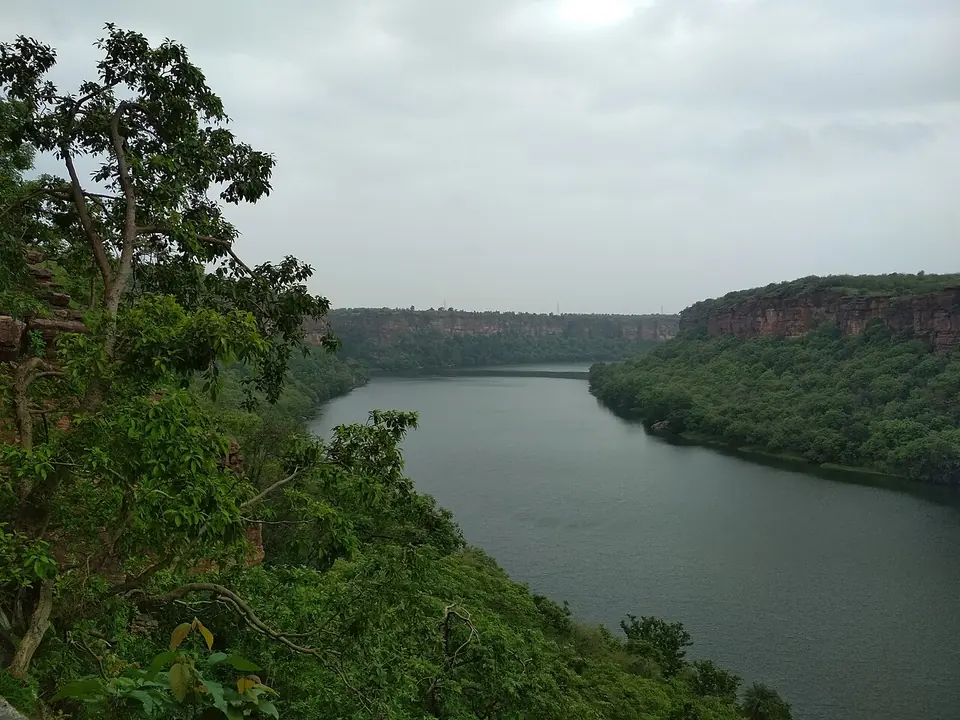
A green monsoon gorge of the Chambal near Kota
Monsoon in the Chambal gorge. Photo: Chhayasharma227, CC BY-SA 4.0

Gorge · temple · waterfall

Gaipernath

≈ 22 km from Kota≈ 300 stepsWaterfall: monsoon

At Gaipernath a side-stream of the Chambal has cut a deep amphitheatre into the plateau. Roughly 300 steps lead down past rock overhangs to an old Shiva temple; in the monsoon a waterfall plunges over the rim.

The shelters here are among the Chambal Valley rock-art sites, and the cliffs downstream are good for watching vultures. Visit early — the climb back up is steep.

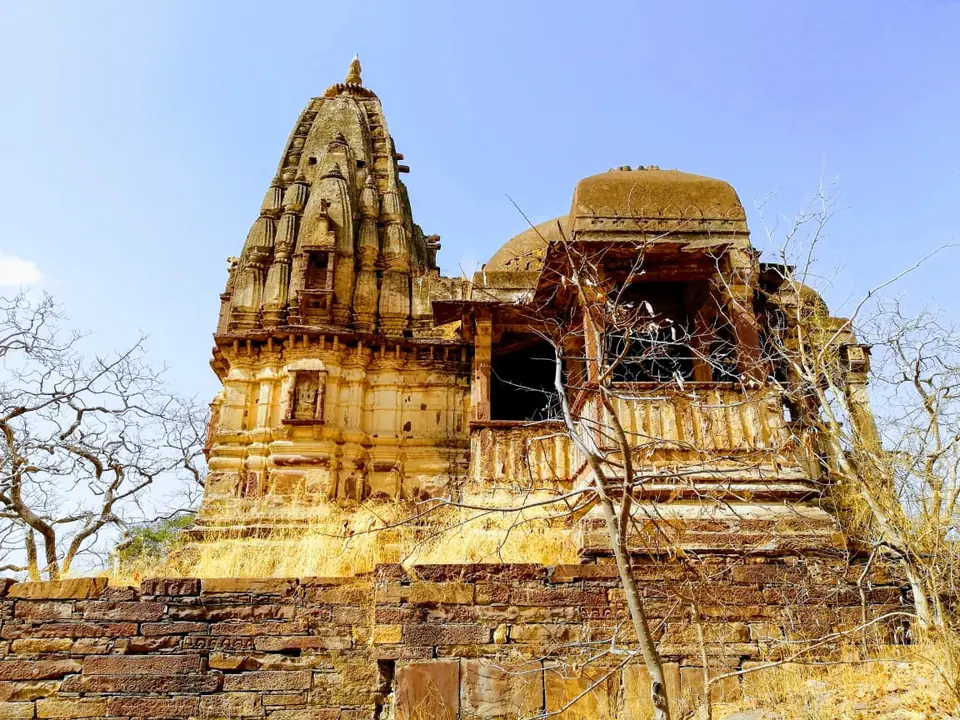
Ruined stone temple with a carved spire inside Mukundara
Temple ruins inside the reserve — Mukundara Hills archive

Villages & ruins inside the reserve

Mandirgarh & Girdharpura

Inside MHTRVisit with a guide

Mandirgarh is said to have held 108 temples, founded in the 12th century by a ruler of Malwa (historian Dr Firoz Ahmed names Raja Nar Barman). Broken sculpture lies half buried across the site, and inscriptions survive on a Shiva temple and its images.

Girdharpura, another old village inside the reserve, was once a mint and a seat of justice. Its temples, stepwells and old houses still stand, and its twin tanks are a haven for migratory birds.

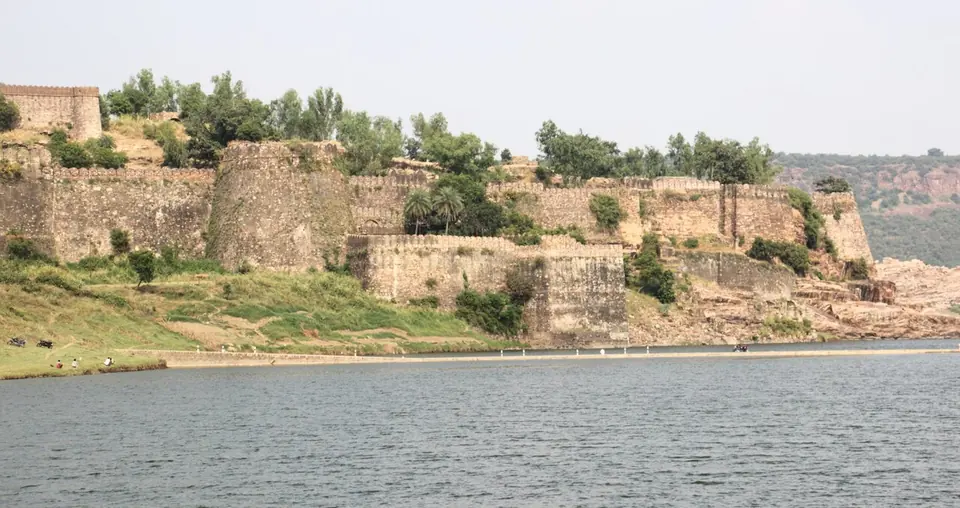
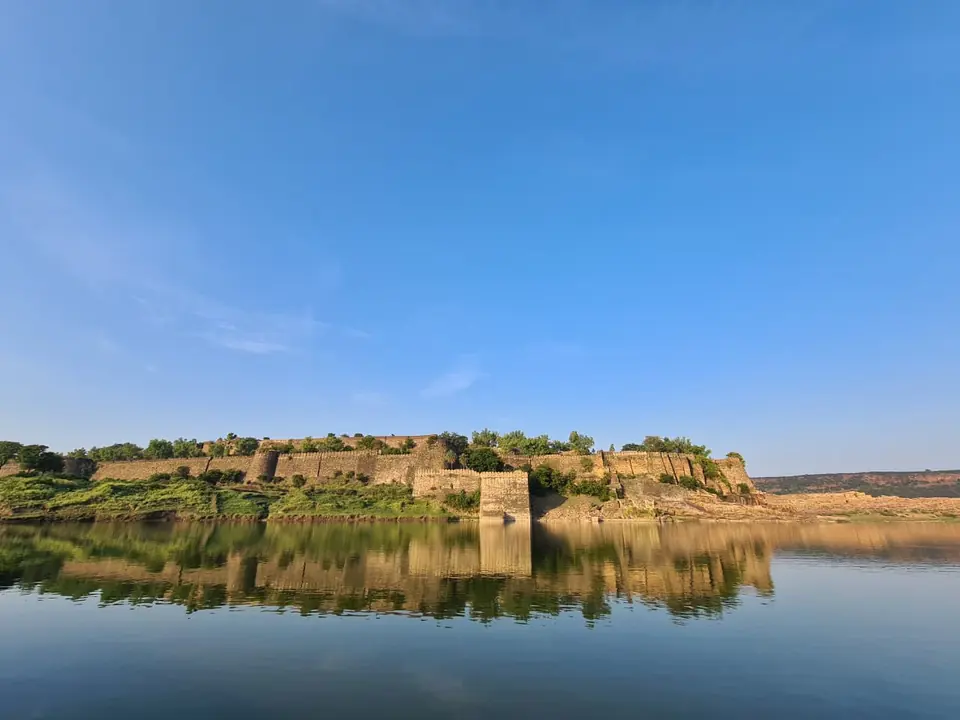
Gagron Fort walls rising above the river
Gagron Fort. Photo: Ravikrishnan A K, CC BY-SA 4.0

UNESCO World Heritage · Jhalawar

Gagron Fort

Ahu – Kali Sindh confluence≈ 5 km from Jhalawar≈ 90 km from Kota

A true jal durg — water fort — Gagron rises from the rock where the Ahu meets the Kali Sindh, moated by rivers on three sides. Built under the Dod Parmars in the 12th century and later the seat of the Khichi Chauhans, it saw many sieges; in 1423, when Sultan Hoshang Shah of Malwa attacked, its defender Achal Das Khichi fell and the women of the fort performed jauhar.

In 2013 Gagron was inscribed on the UNESCO World Heritage List as one of the six Hill Forts of Rajasthan. Just outside stands the dargah of the Sufi saint Mitthe Shah. The fort is also famous for the Alexandrine parakeet — the “Gagroni tota” — once found here in thousands.

The wetlands of Laxmipura and Nolav nearby are excellent for winter birds.

Gagron in the Hindi history

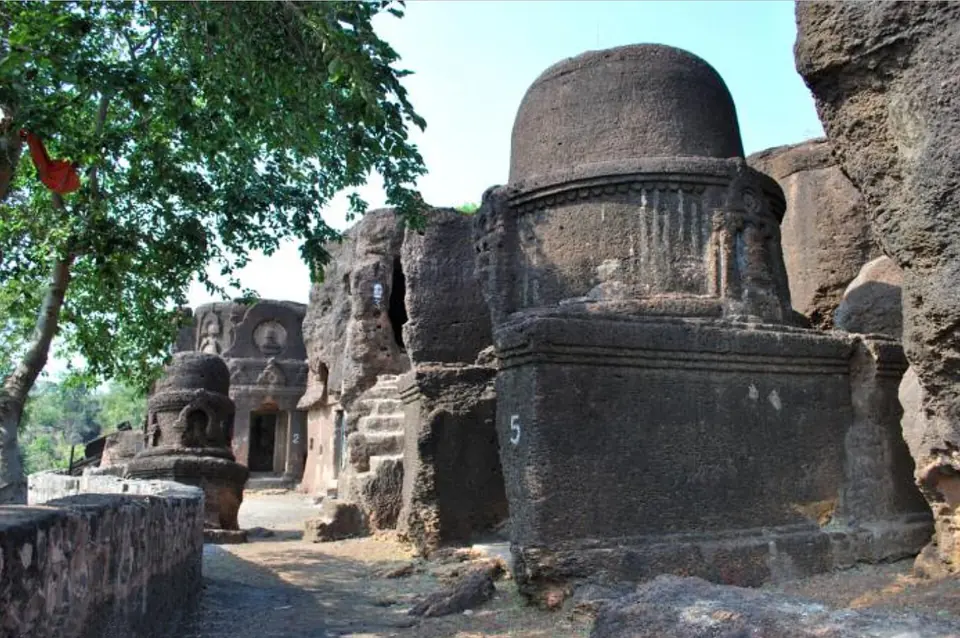
Rock-cut stupa and cave cells at Kolvi, Jhalawar
Stupa and cells at Kolvi. Photo: Partner, CC BY-SA 3.0

Buddhist heritage · Jhalawar

Kolvi Caves

Southern Jhalawar district≈ 3.5–4 hrs from KotaArchaeological Survey of India

Carved into a laterite hill are about fifty Buddhist caves — monks' cells, chaitya halls and rock-cut stupas — dated to roughly the 7th–9th centuries CE. Among the images are Buddha figures in meditation and a large standing Buddha.

Kolvi is one of very few Buddhist cave complexes in Rajasthan and appears, as “Kholvi”, among the Chambal Valley rock-art sites on UNESCO's Tentative List. The smaller Binnayaga cave group lies nearby. Combine with Gagron and Jhalrapatan for a Jhalawar day.

Tenth-century temples of the Baroli group near Rawatbhata
The Baroli temple group. Photo: Ritukejai, CC BY-SA 4.0

Chittorgarh district

Rawatbhata: Baroli temples, dams & waterfalls

≈ 50 km from KotaBaroli ≈ 45 km

Baroli temples — eight 10th-century temples in a walled compound, with a ninth nearby, built in the Gurjara-Pratihara style and among the earliest temple groups in Rajasthan. They are protected by the ASI; the Ghateshwara Mahadeva temple, with its finely carved stone, is the jewel.

Rana Pratap Sagar dam holds back the Chambal above the gorge, and nearby the Chuliya falls thunder after the monsoon. The Padajhar waterfall and cave temple is one of the Chambal Valley rock-art sites.

Bhainsrorgarh — a fort on a cliff above the Chambal and a wildlife sanctuary (1983) that became part of Mukundara's core in October 2023, with otters and crocodiles along its river.

The Rajasthan Atomic Power Station at Rawatbhata is a restricted area — no photography.

The tall carved spire of the Sun Temple at Jhalrapatan
Sun Temple, Jhalrapatan. Photo: Ravikrishnan A K, CC BY-SA 4.0

Jhalawar

Jhalrapatan Sun Temple

≈ 7 km from Jhalawar≈ 95 km from Kota

The soaring Surya (Padmanabha) temple of Jhalrapatan, usually dated to around the 10th century, is one of the finest temples in Hadoti; the Chandrabhaga temples stand on the river nearby. Pair with Gagron Fort for a Jhalawar day.

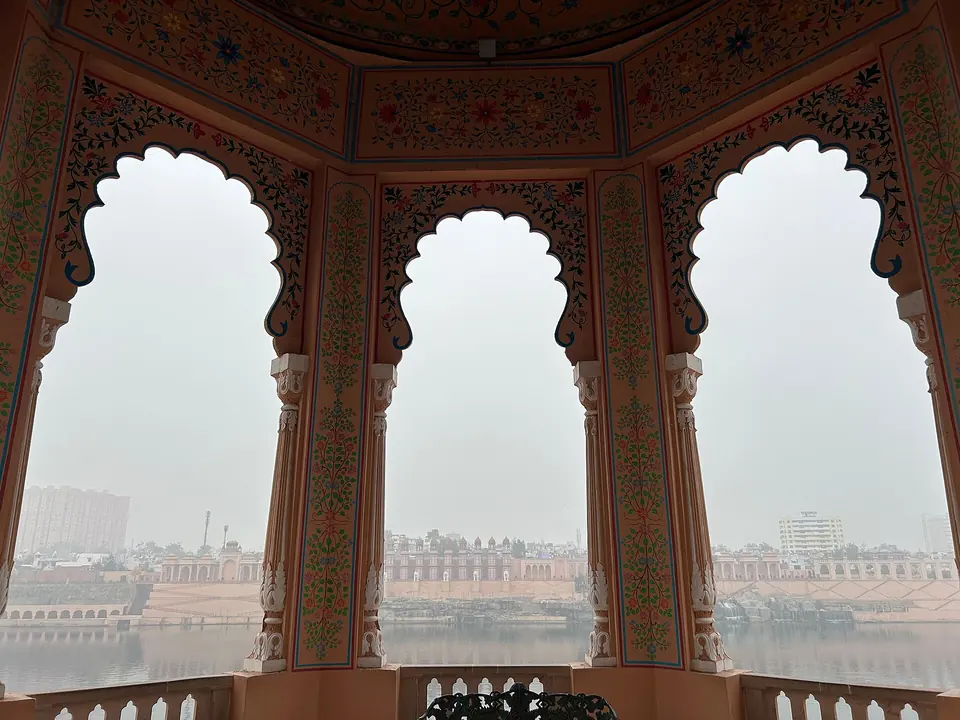
Carved pavilion arches framing the Chambal River Front in Kota
Chambal River Front, Kota. Photo: Imakanksha, CC BY-SA 4.0

Gateway city

Kota: river front, palaces & Abheda

Base for every safari

Kota's Chambal River Front lines the river with ghats, gardens and monumental sculpture — lovely at dusk. The Garh Palace and Rao Madho Singh Museum hold the Kota school of miniature painting, famous for hunting scenes set in these very forests; Kishore Sagar and its island Jag Mandir are in the old town.

Abheda Biological Park, on the edge of Kota, is where the orphaned tigress MT-7 was raised for 22 months before her rewilding in Mukundara. Visitor information: abhedabiologicalpark.in.

Heritage day plans

Four ways to spend a heritage day

Sites are spread across four districts, so group them by direction. A car with driver from Kota is the practical way to travel.

Half day · from Kota

Chambal gorges & rock art

Gaipernath gorge and its shelters in the morning, then the Garadiya Mahadev viewpoint — with a guide, a painted shelter on the way.

Full day · with the safari

Tiger morning, Gupta ruins

Morning tiger safari from Darrah, then Bhim ki Chauri, Abli Meeni Mahal and the Darrah palace right by the gate.

Full day · south-west

Rawatbhata & Baroli

The Baroli temples, Rana Pratap Sagar dam and Bhainsrorgarh on the Chambal; the Chuliya falls after the monsoon.

Full day · Jhalawar

Gagron, Jhalrapatan & Kolvi

Gagron Fort and the Mitthe Shah dargah, the Jhalrapatan Sun Temple, and — for an early start — the Kolvi caves.

Also nearby

More within a day's drive

PlaceWhy goFrom Kota
Ramgarh Vishdhari Tiger ReserveBundi's tiger reserve (2022), with eight tigers in 2026 — Mukundara's partner on the Ranthambhore corridor.≈ 1–1.5 hrs
BundiStepwells, Taragarh fort and the Chitrashala murals.≈ 40 km · 1 hr
Ranthambhore National ParkThe source population for most of Mukundara's tigers.≈ 2.5–3 hrs
MenalWaterfall and medieval Shiva temples on the Bundi–Chittorgarh road.≈ 2.5 hrs

Distances are approximate road distances and drive times; allow extra time on village roads.

Talk to us

Plan your Mukundara visit

Tiger safari by jeep or canter, a Chambal boat safari, wildlife trails or a heritage and rock-painting visit — send your dates and group size by WhatsApp, phone or email and we'll help you plan it.

Chat on WhatsApp