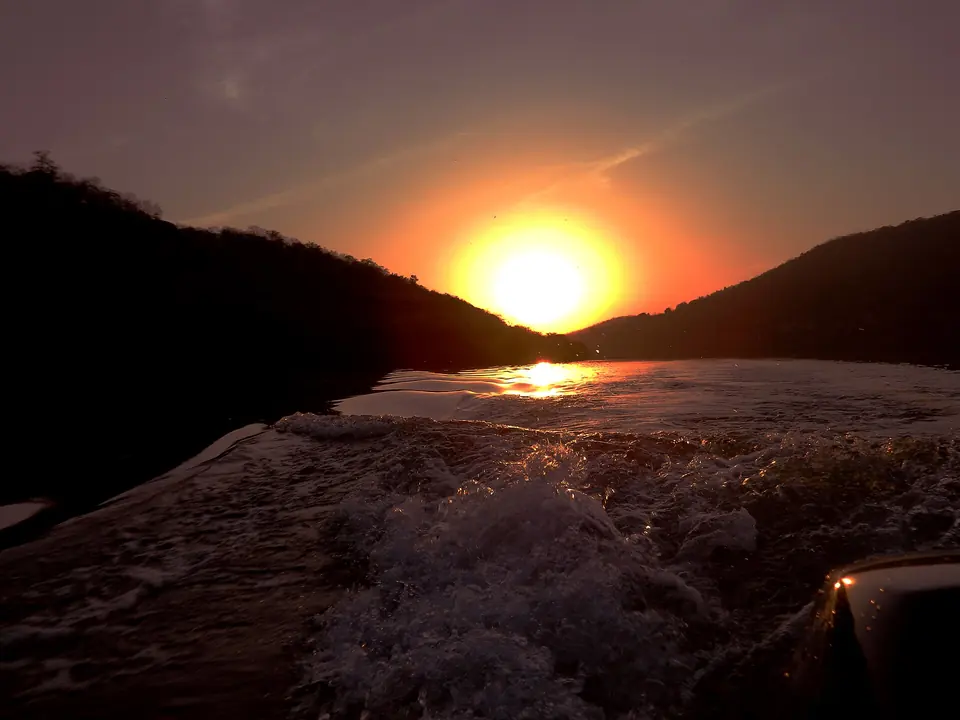
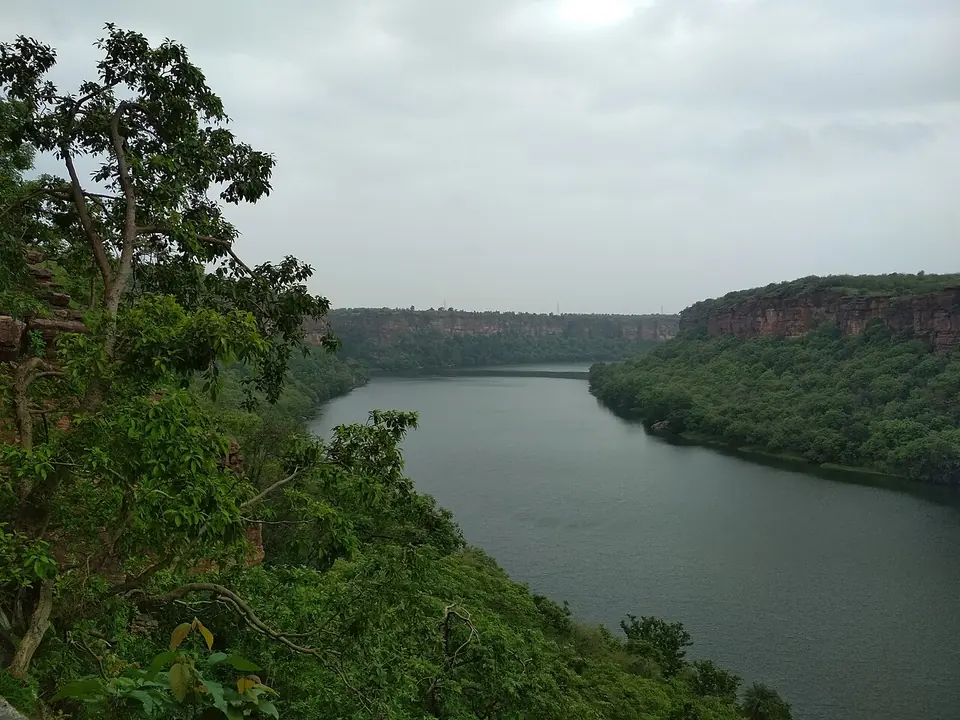
Before you walk

Walking in a tiger reserve

The core of Mukundara Hills Tiger Reserve is closed to walkers — it is tiger habitat. The places below are viewpoints, waterbodies, wetlands and neighbouring reserves that visitors can reach, some through a forest check post. For anything beyond them, go with a local guide and forest-department permission; we can advise.

Inside Mukundara

Gorges & viewpoints

The Chambal's side-gorges are the best places on foot for vultures, eagles and langurs — and they double as rock-art sites.

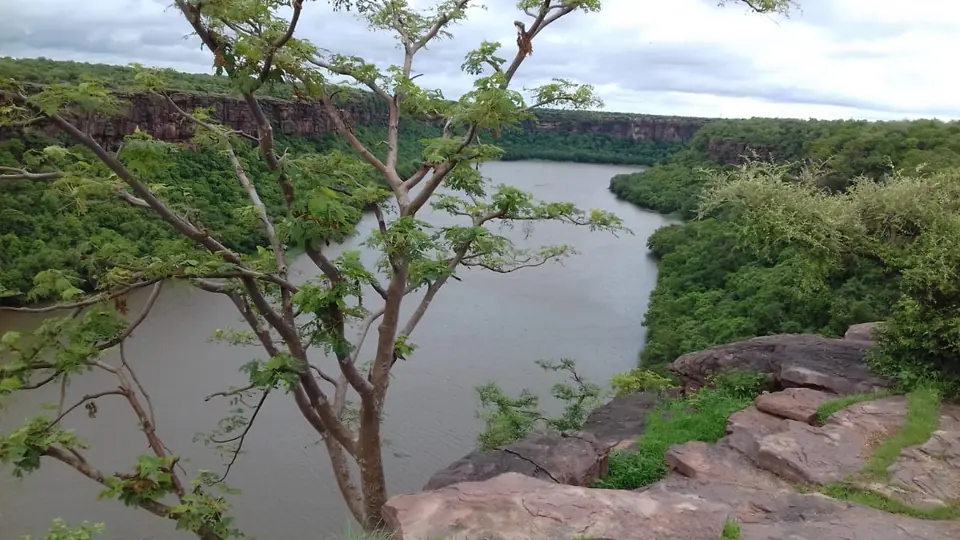
Monsoon-green gorge of the Chambal seen from Garadiya Mahadev

Viewpoint walk · Easy · Vultures

Garadiya Mahadev rim

From the forest check post a 1.2 km track leads to a ledge above a horseshoe bend of the Chambal, some 300 feet below. A small Shiva shrine sits by a stream; langurs patrol the rocks and vultures ride the thermals over the gorge.

≈ 25–30 km from Kota · off NH-27 · entry fee at check post · reported open 7:00–17:30
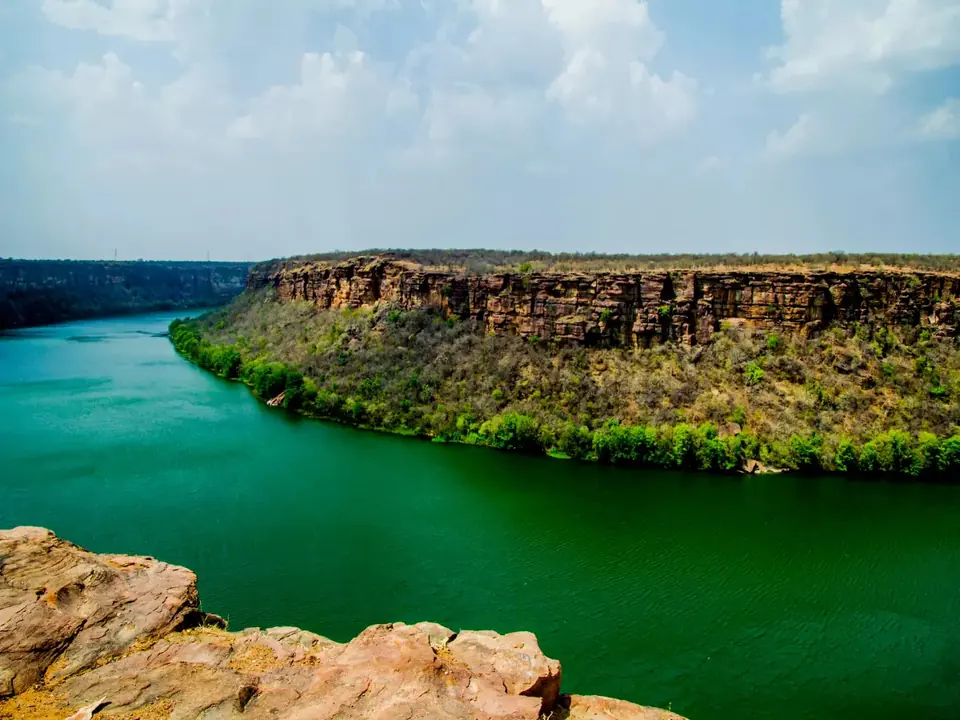
Green water of the Chambal below sandstone cliffs near Kota

Gorge descent · Moderate · Waterfall

Gaipernath gorge

Roughly 300 stone steps lead down into a side-gorge of the Chambal to an old Shiva temple. In the monsoon a waterfall pours over the rim; in winter it is a cool, shaded amphitheatre of sandstone. The cliffs downstream are good for vultures, and its shelters are among the Chambal Valley rock-art sites.

≈ 22 km from Kota · steep steps · waterfall July–September

Inside Mukundara

Rivers, dams & wetlands

Water is where Mukundara's wildlife is easiest to watch — otters and crocodiles on the Chambal, muggers at Sawan Bhadon, and thousands of wintering waterbirds on the village tanks.

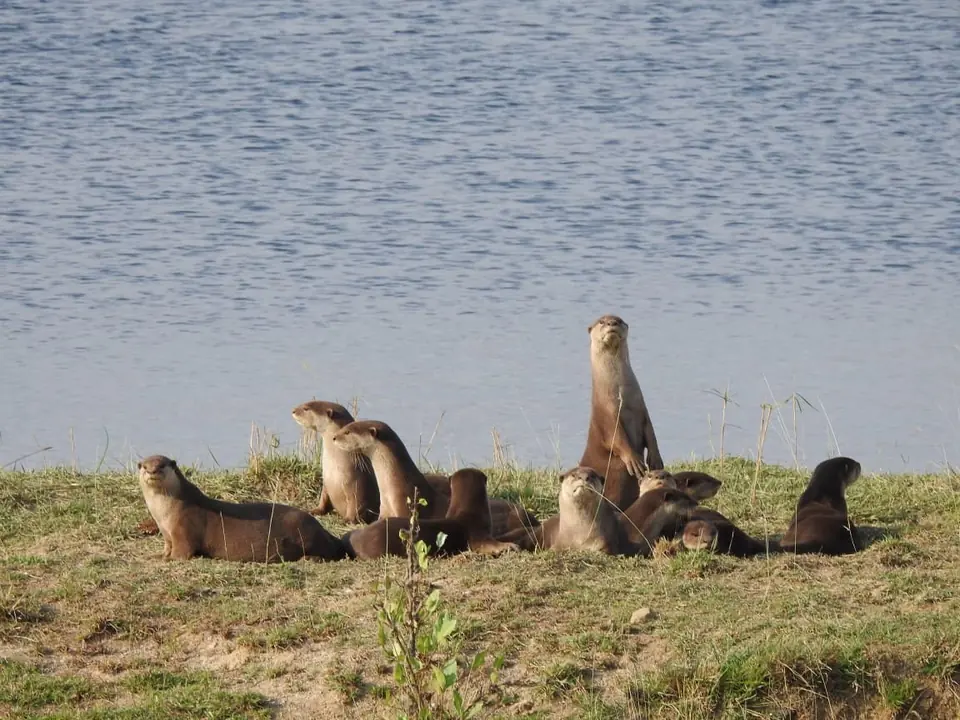
A family of smooth-coated otters on a grassy riverbank

River · Otters & crocodiles

Jawahar Sagar & Bhainsrorgarh

Upstream of Kota the Chambal runs through Jawahar Sagar sanctuary — one of Mukundara's founding blocks — and past the cliff fort of Bhainsrorgarh, a 1983 sanctuary added to the reserve's core in October 2023. One of Rajasthan's strongholds for smooth-coated otters.

Best by boat · winter mornings · Chambal Safari

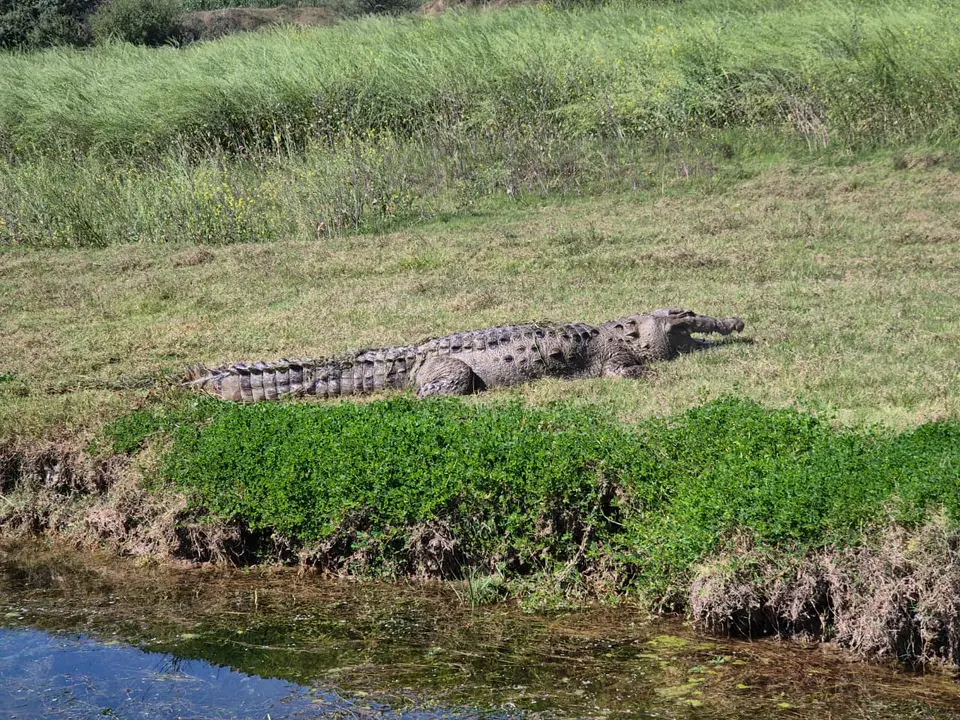
A mugger crocodile basking on a grassy bank beside water

Crocodiles & raptors

Sawan Bhadon dam

About 80 mugger crocodiles have been released at Sawan Bhadon dam by the forest department. Mornings bring basking crocodiles and raptors — and in winter, migratory vultures that use Mukundara as a feeding ground.

Inside MHTR · ask us about access

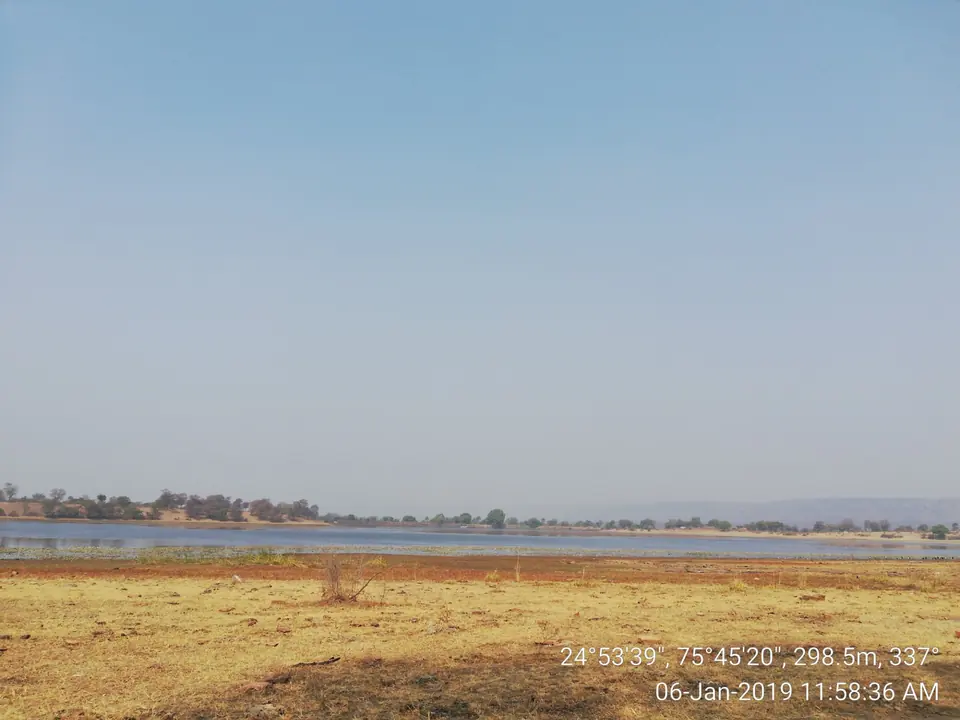
A wide shallow wetland with dry grassland in winter

Birding walk · Easy

Winter wetlands

In winter the reserve's tanks fill with migrants. The ponds of Laxmipura and Nolav near Gagron, the twin tanks of Girdharpura and the tank at Shripura hold thousands of ducks, waders and storks; the sarus crane is a highlight.

November – February · mornings · bring binoculars

Beyond Mukundara

Other wildlife areas within a day of Kota

Hadoti has more wild country than most visitors realise. These pair well with a Mukundara safari — a second tiger reserve, open grassland with blackbuck, and a riverside sanctuary around an old fort.

Tiger reserve · Bundi

Ramgarh Vishdhari Tiger Reserve

≈ 1–1.5 hrs from Kota

Bundi's tiger reserve, notified in 2022 and holding eight tigers in 2026. It is the middle link of the Ranthambhore – Ramgarh Vishdhari – Mukundara chain, on the hill route that tigers have used to reach Mukundara on their own.

Grassland · Blackbuck

Sorsan grasslands

≈ 50 km east of Kota · Baran district

Open grassland and scrub with blackbuck and chinkara, partridges and quails, and — from October to March — wintering birds on its ponds. A complete change of scene from Mukundara's forested ridges; go early in the morning.

Sanctuary & fort · Baran

Shergarh Wildlife Sanctuary

Est. 1983 · Parban river · ≈ 65 km from Baran town

A small sanctuary on the Parban river around the ruins of Shergarh fort and its old Jain and Hindu temples. Leopard, sloth bear, striped hyena, sambar, chital and chinkara live here — wildlife and heritage in one long day.

Kota city · Families

Abheda Biological Park

Edge of Kota

Where the orphaned tigress MT-7 was raised for 22 months before her rewilding in Mukundara — a good first stop for families and school groups. Visitor information: abhedabiologicalpark.in.

See also the wildlife guide & sighting planner for what to look for in each place.

Heritage walks

Walks through history

Ruins, forts, temples and caves — each a short, easy walk. Full details are on the heritage & rock art page.

Heritage walk · Easy

Darrah heritage walk

Right by the safari gate: the 5th-century ruins of Bhim ki Chauri, Rao Mukund Singh's Darrah hunting palace and the hillside Abli Meeni Mahal. Combine with a morning safari. More →

Fort walk · Easy

Gagron ramparts at sunset

Walk the walls of this UNESCO-listed water fort at the meeting of the Ahu and Kali Sindh, then down to the river and the dargah of Mitthe Shah. Watch for Alexandrine parakeets. More →

Temple walk · Easy

Baroli temples & the dam

Wander the walled compound of 10th-century temples at Baroli, then on to Rana Pratap Sagar dam and, after the rains, the Chuliya falls. More →

Cave walk · Easy–moderate

Kolvi caves

A short climb up a laterite hill in southern Jhalawar to some fifty rock-cut Buddhist caves, stupas and Buddha images. More →

Guided walks

Walk with someone who reads the forest

A good local guide turns a stroll into a field lesson: pugmarks in the sand of a nala, a leopard's scrape, the alarm call of a sambar, a vulture's whitewashed nest ledge, a carved stone from a vanished temple half buried in leaf litter. Tell us your interests — birds, tracks, rock art, temples or photography — and your fitness, and we'll suggest a walk and help arrange a guide and any permissions needed.

Ask about a guided walk WhatsApp

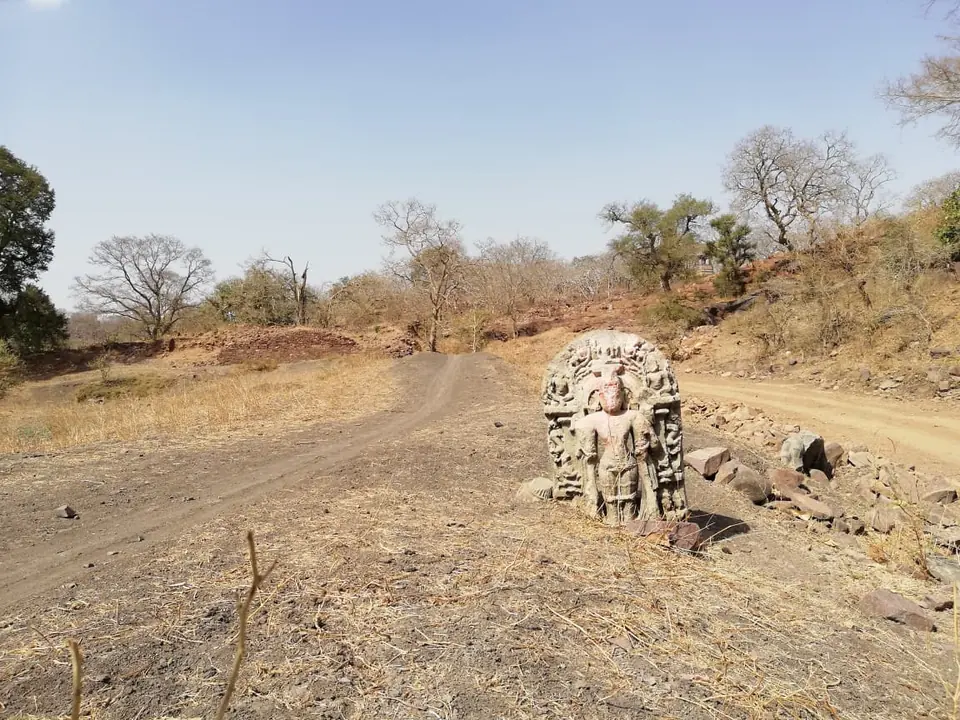
An ancient carved stone figure standing beside a forest path in Mukundara
An old sculpture beside a forest path — Mukundara Hills archive

Stay safe

Trail safety & etiquette

  • Walk early: start at first light and finish before the midday heat, especially from March to June.
  • Carry at least two litres of water per person, a hat and sturdy shoes; sandstone steps are slippery after rain.
  • Stay on paths and away from cliff edges — gorge rims have no railings in many places.
  • Never enter the core zone or walk at dusk and after dark; this is tiger, leopard and sloth bear country.
  • Do not touch, wet or chalk rock paintings; do not climb on ruins or remove anything.
  • Temples are active places of worship — dress modestly and remove shoes where asked.
  • Carry your litter back to Kota.

Trail FAQs

Can I walk inside Mukundara Hills Tiger Reserve?

Not in the core zone — it is tiger habitat. The walks on this page are at viewpoints, temples, heritage sites and wetlands open to visitors; anything more needs a local guide and forest-department permission.

What is the best short walk near Kota?

The 1.2 km track to the Garadiya Mahadev viewpoint over the Chambal horseshoe, or the ≈ 300-step descent into the Gaipernath gorge.

When does the Gaipernath waterfall flow?

During and just after the monsoon, roughly July to September. The rest of the year the gorge is dry but still beautiful.

Do I need a guide?

Not for Garadiya or Gaipernath, but a local guide adds a great deal on heritage walks, birding and rock-art visits. Ask us.

What other wildlife areas are near Kota?

Ramgarh Vishdhari Tiger Reserve in Bundi (about 1–1.5 hours), the Sorsan grasslands with blackbuck (about 50 km east of Kota), Shergarh Wildlife Sanctuary in Baran district and, in Kota itself, Abheda Biological Park. See above.

Talk to us

Plan your Mukundara visit

Tiger safari by jeep or canter, a Chambal boat safari, wildlife trails or a heritage and rock-painting visit — send your dates and group size by WhatsApp, phone or email and we'll help you plan it.

Chat on WhatsApp