Science & research · MHTR
Mukundara Hills Tiger Reserve: Ecology, Tigers & Research
A field guide to the landscape, forests, wildlife and tiger recovery of MHTR — with the numbers, dates and sources researchers and students need.
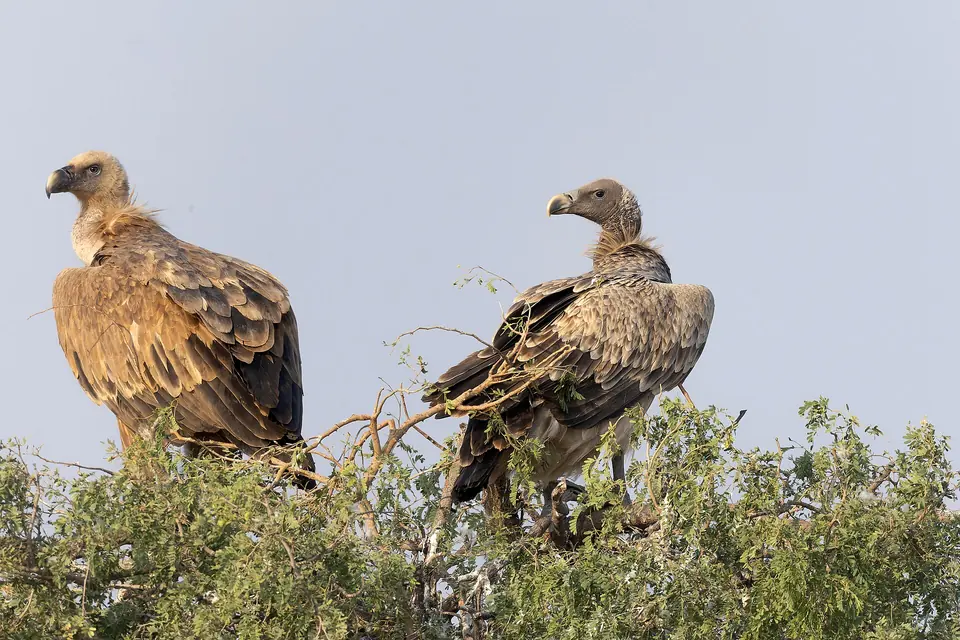
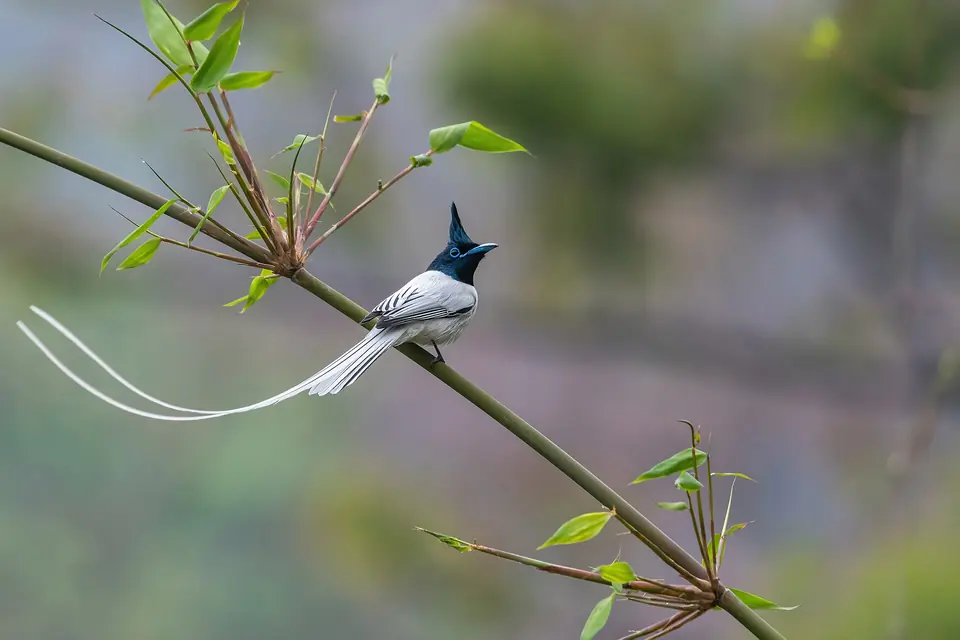
Photo: Tisha Mukherjee, CC BY-SA 4.0

Reserve at a glance
| Name | Mukundara Hills Tiger Reserve (MHTR); also spelt Mukundra. Formerly proposed as Rajiv Gandhi Tiger Reserve |
|---|---|
| Notified | 9 April 2013 (tiger reserve) · National park since 2004 |
| Area (2013) | 759.99 km² — 417.17 km² core (critical tiger habitat) + 342.82 km² buffer |
| Constituents | Darrah Wildlife Sanctuary (1955), Jawahar Sagar Wildlife Sanctuary (1975), part of the National Chambal Sanctuary, Mukundara Hills National Park (2004). Bhainsrorgarh Wildlife Sanctuary added to the core by order of 5 October 2023 |
| Districts | Kota, Bundi, Chittorgarh, Jhalawar (Hadoti, south-east Rajasthan) |
| Boundary rivers | Chambal, Kali Sindh, Ahu, Amjhar |
| Relief | Two parallel ridges ≈ 80 km long; mean elevation ≈ 300 m; highest point 517 m at Chand Bawdi |
| Centroid | 24.868° N, 75.856° E |
| Tigers | 7 in mid-2026 (2 ♂, 4 ♀, 1 cub) |
| Birds | 225+ species estimated |
Landscape & geology
Mukundara is a long, narrow forest on the northern scarp of the Malwa plateau. Two parallel sandstone ridges run from Shripura near Bhainsrorgarh in Chittorgarh, past Baroli, south-east to Gagron in Jhalawar — about 80 km. The only easy passage through the hills was the nal (pass) of Darrah — for centuries the only route from Chittor to Jhalawar, and the reason the forest was long known simply as Darrah.
The Chambal has cut a steep gorge through the Vindhyan sandstone between Rana Pratap Sagar, Jawahar Sagar and Kota. Its cliffs, horseshoe meanders and side-gorges (Garadiya Mahadev, Gaipernath) create micro-habitats for cliff-nesting vultures and raptors, and the rock shelters used by people for tens of thousands of years.
Forests
Mixed dry deciduous forest dominated by dhok (Anogeissus pendula) covers more than 70% of the reserve, greening the hills in the rains and turning grey-brown in summer, when palash and semal flower red. Moist valleys hold arjun and kadamb along streams.
| Forest type | Characteristic species |
|---|---|
| Tropical moist deciduous (sub-humid hills) | Anogeissus latifolia, Butea monosperma, Dendrocalamus strictus, Diospyros melanoxylon, Mitragyna parviflora, Terminalia alata |
| Mixed dry deciduous (> 70% of area) | Anogeissus pendula, Terminalia spp., Wrightia tinctoria |
| Scrub | Acacia senegal, A. leucophloea, Capparis decidua, C. sepiaria, Dichrostachys cinerea, Euphorbia nerifolia, Mimosa hamata |
Wildlife
Mammals
Apex and meso-predators: tiger, leopard, sloth bear, Indian wolf, striped hyena, golden jackal and jungle cat. Ungulates: sambar, chital, chinkara, nilgai and wild boar. The dhole was recorded in Kota's forests until about 1920 and is now locally extinct. The Chambal holds smooth-coated otters.
Reptiles
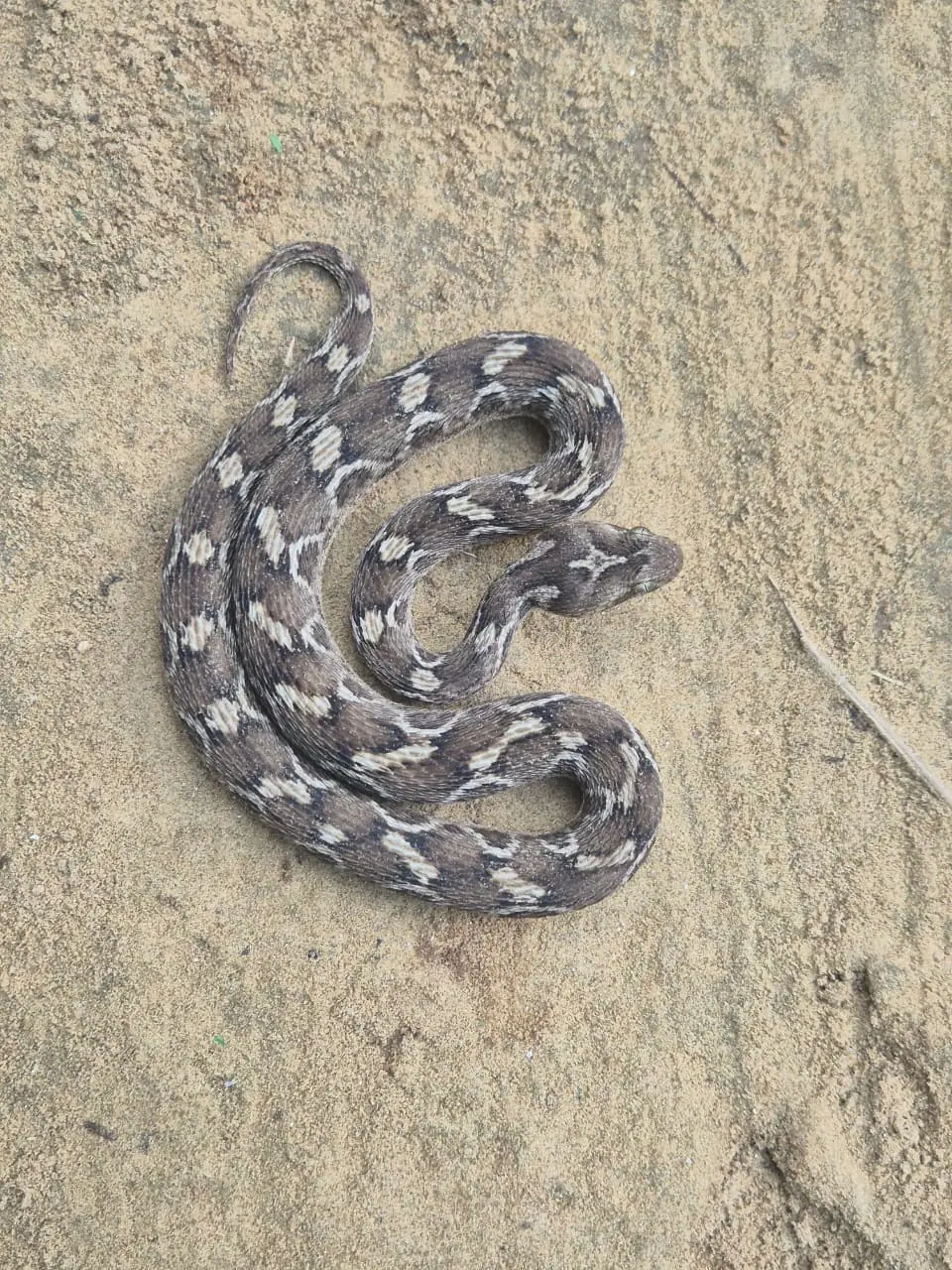
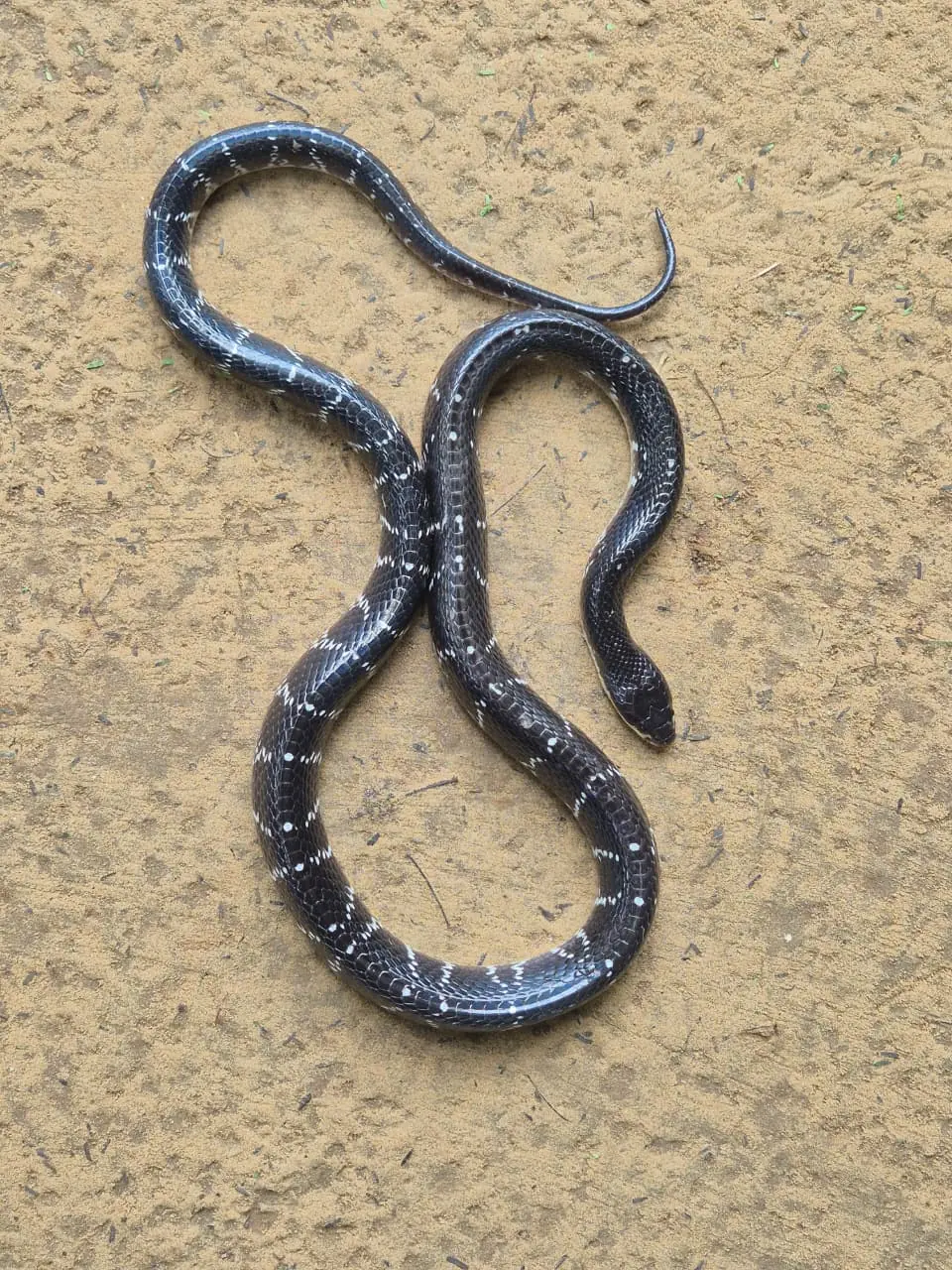
Gharial and mugger in the Chambal; about 80 mugger released by the forest department at Sawan Bhadon dam; freshwater turtles at Kadap ka Khal; saw-scaled viper and common krait among the snakes.
Birds
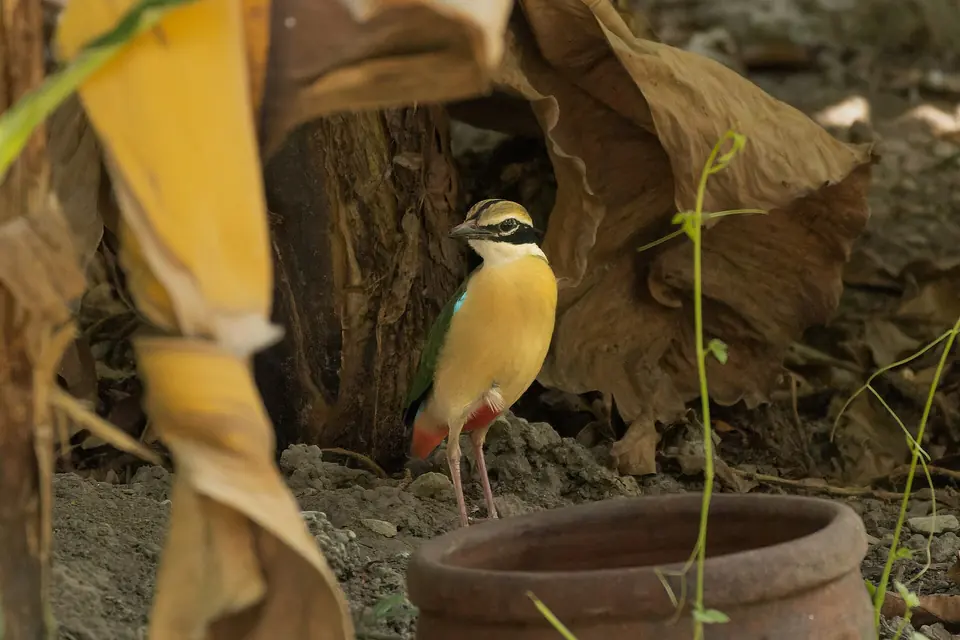
More than 225 species are estimated. Highlights include cliff-nesting Indian (long-billed) vultures Gyps indicus in the Chambal gorge, wintering migratory vultures, eagles and owls, sarus crane, Indian paradise flycatcher, Indian pitta, parakeets including the Alexandrine (the “Gagroni tota”), nightjars, stork-billed kingfisher and munias. The wetlands at Laxmipura, Nolav, Girdharpura and Shripura hold thousands of wintering waterbirds.


Tiger recovery: a timeline
Mukundara is one of India's clearest case studies in how dispersal, translocation and rewilding combine — and how fragile a founder population can be.
Tigers hunted out of Hadoti
About 100 tigers were shot in Hadoti in the 1950s and 60s; the last known young tiger was killed near Chhipabarod in 1984.
The idea of a park
Deputy Conservator V.K. Salwan proposes a national park linking Darrah with Jawahar Sagar.
Broken Tail
A tiger is killed by a train near Darrah. In 2005 photographs identify him as Ranthambhore's missing “Broken Tail”, who had travelled ≈ 140 km — proof that a corridor still worked.
National park
Darrah is declared Mukundara Hills National Park.
T-35
A tigress from Ranthambhore's Gilai Sagar area lives in the Kota–Sultanpur forests until her death in March 2016.
Tiger reserve
Rajasthan notifies Mukundara Hills Tiger Reserve: 759.99 km², combining Darrah and Jawahar Sagar sanctuaries and the national park.
MT-1 “Mukundraj”
T-91, a Ranthambhore male that had wandered into the Bundi forests, is darted in Ramgarh Vishdhari and released into Mukundara's enclosure.
MT-2
Tigress T-106 is brought from Ranthambhore.
MT-3 walks in
Male T-98 disperses ≈ 120 km from Ranthambhore on his own, crossing the Kali Sindh, and is caught on camera traps inside the enclosure.
MT-4
Tigress T-83 is relocated from Ranthambhore.
Collapse
Cubs born to MT-2 are sighted, but within months MT-3 (23 July) and MT-2 (3 August) die, and MT-1 and the cubs are lost. MT-4 is left alone for more than three years.
MT-5
Male T-110 (son of Ranthambhore's T-69) joins MT-4.
MT-6, safaris and a bigger core
A tigress arrives from Ranthambhore in August (MT-6); Bhainsrorgarh Wildlife Sanctuary is added to the core (5 October); regular jungle safaris open to visitors.
A cub, Kankati and a rewilded orphan
A cub born to MT-6 is sighted in June; tigress RBT-2507 “Kankati” arrives from Ranthambhore (MT-8); an orphaned Ranthambhore tigress raised for 22 months at Abheda Biological Park, Kota, begins staged rewilding (MT-7).
MT-9
Male T-2408, born in 2022 in Ranthambhore's Khandar range, is soft-released and then set free in the reserve.
MT-10 “Vindhya”
A 3.5-year-old tigress from Bandhavgarh, Madhya Pradesh — the reserve's first inter-state translocation — is hard-released on 7 March. MT-7 moves to a 21-ha enclosure for the next phase of rewilding.
Seven tigers
Two males, four females and a cub. More translocations are planned after the monsoon.
Corridors
Tigers have repeatedly walked to Mukundara on their own — Broken Tail (reached Darrah in 2003 after ≈ 140 km), the tigress T-35 (Kota–Sultanpur area, 2009–2016) and T-98, who became MT-3 (2019). At least two potential corridors link Ranthambhore to Mukundara:
- Hill route: Indergarh – Lakheri – Ramgarh Vishdhari – Dabi – Jawahar Sagar sanctuary.
- River route: along the Chambal and Kali Sindh via Gagron to Darrah.
With Ramgarh Vishdhari notified as a tiger reserve (2022) and holding eight tigers in 2026, the Ranthambhore – Ramgarh Vishdhari – Mukundara chain is central to plans for a connected tiger landscape reaching into Madhya Pradesh.
People & the reserve
Villages within the reserve include Girdharpura, Damodarpura, Laxmipura, Mashalpura, Kharli Baori, Rooppura, Kolipura, Darrah, Bhukhi, Ghanti, Bagicha, Rojhda Talab, Narayanpura, Amba Rani and Nosera. Relocation has been sanctioned; Kharli Baori and Laxmipura have moved. Livestock dependence and compensation remain central issues for conservation here.
Archaeology & rock art
The gorge and its shelters form part of the Rock Art Sites of the Chambal Valley, placed on UNESCO's Tentative List in February 2024. Listed Kota-district sites include Darra, Garadiya Mahadev (“Garedamahadeo”), Gaipernath (“Gepranath”), Jawahar Sagar dam and Narsinghgarh Mataji; Jhalawar's include Gagron and Kolvi. Paintings range from Mesolithic hunting and gathering scenes to Chalcolithic cattle and later religious symbols; engraved ostrich eggshell from Chandrasel in Kota district is dated to about 40,000 years BP.
Later layers include Bhim ki Chauri at Darrah, a mid-to-late 5th-century temple attributed to the Guptas or their Aulikara feudatories, and the 10th-century Gurjara-Pratihara temples of Baroli.
Open research themes
Rewilding outcomes
How does a captive-raised orphan (MT-7) fare after staged release? Hunting success, ranging, survival and lessons for other reserves.
Prey recovery
Ungulate densities, prey augmentation and grassland management in the Darrah and Jawahar Sagar blocks.
Corridors & dispersal
Movement between Ranthambhore, Ramgarh Vishdhari and Mukundara; genetic connectivity; road and rail crossings at Darrah.
Cliff-nesting vultures
Colony size, breeding success and threats in the Chambal gorge.
Otters & crocodilians
Smooth-coated otter, gharial and mugger between Rana Pratap Sagar and Kota; effects of dam releases.
People & relocation
Livelihoods, livestock dependence and outcomes for relocated villages such as Kharli Baori and Laxmipura.
Rock art & archaeology
Documenting and protecting shelters in the Chambal Valley UNESCO Tentative List nomination.
Wetlands & winter birds
Waterbird counts at Girdharpura, Laxmipura, Nolav and Shripura.
Doing research in MHTR
- Field research inside the tiger reserve needs written permission from the Chief Wildlife Warden, Rajasthan, routed through the Field Director, Mukundara Hills Tiger Reserve (Kota).
- Camera trapping, capture, sampling and drone work require specific approvals.
- Publish tiger, vulture-nest and rock-art locations only at coarse resolution.
- Share results with the reserve management — local data improves local decisions.
Planning a study, dissertation or field course? Write to us (or call/WhatsApp +91 77373 39915) — we can share background material and help you plan field logistics.
Key sources
- Singh, P. & Reddy, G.V. (2016). Lost Tigers, Plundered Forests: a report tracing the decline of the tiger across the state of Rajasthan (1900 to present). WWF-India, New Delhi.
- Narayan, J. & Mankodi, K.L. (2010). The case of the Bhim ki Chauri ruins at Mukandara. Marg 62(1): 80. academia.edu
- UNESCO World Heritage Centre (2024). Rock Art Sites of the Chambal Valley — Tentative List. whc.unesco.org/en/tentativelists/6732
- UNESCO World Heritage Centre (2013). Hill Forts of Rajasthan. whc.unesco.org/en/list/247
- Rajasthan Forest Department (2023). Tiger Conservation Plan, Mukundara Hills Tiger Reserve, with Bhainsrodgarh core addition (order dated 05.10.2023). Archived at mhtr.in
- Thakur, A. (2009). A Critical Study of Kota School. Shodhganga. hdl.handle.net/10603/96955
- ETV Bharat (16 July 2026). Tiger numbers rise in Mukundara Hills and Ramgarh Vishdhari (Hindi). etvbharat.com
- ETV Bharat (9 March 2026). Tigress from Bandhavgarh becomes Mukundara's MT-10 (Hindi). etvbharat.com
- Telangana Today / PTI (22 February 2026). Tiger moved to bigger enclosure in Mukundra Hills Tiger Reserve as part of rewilding plan. telanganatoday.com
- Patrika (20 June 2025). Ranthambhore tigress “Kankati” shifted to Mukundara Hills Tiger Reserve (Hindi). patrika.com
- Dainik Navajyoti (2025–26). Reports on Mukundara jungle safari routes and bookings (Hindi). dainiknavajyoti.com
- mukundaranationalpark.com (2025). मुकुन्दरा हिल्स टाइगर रिजर्व — बाघों का ऐतिहासिक शरणस्थल. About Mukundara (Hindi)
Cite this page as: Mukundara Hills Tiger Reserve: Ecology, Tigers & Research. mukundaranationalpark.com/research/ (accessed 22 September 2026).
Talk to us
Plan your Mukundara visit
Tiger safari by jeep or canter, a Chambal boat safari, wildlife trails or a heritage and rock-painting visit — send your dates and group size by WhatsApp, phone or email and we'll help you plan it.