
MT-1 T-91 · male
A Ranthambhore male that had wandered into Ramgarh Vishdhari, Bundi; rescued and shifted to the Mukundara enclosure on 3 April 2018.
Missing since 20 Aug 2020
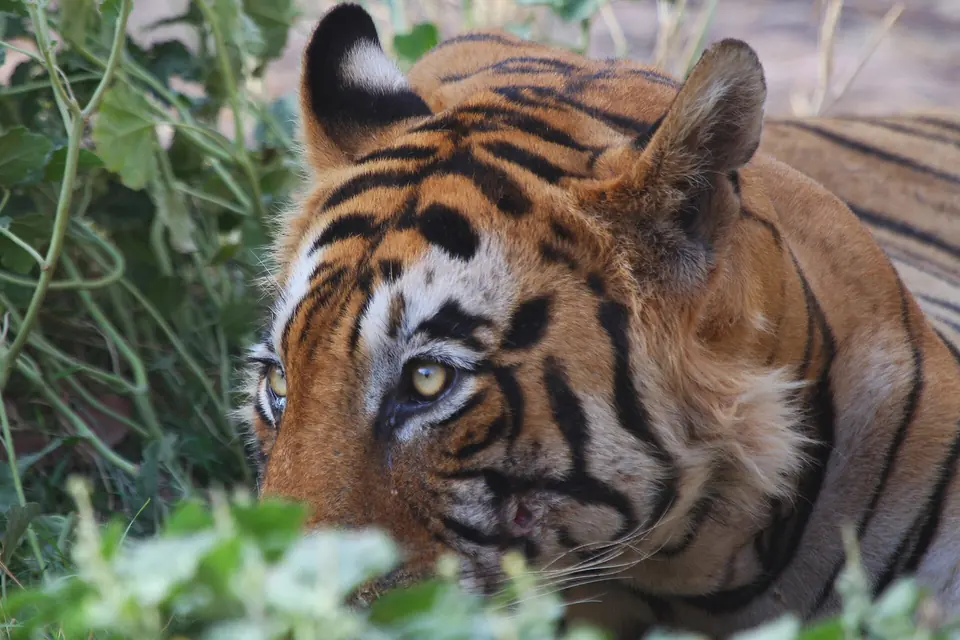
About · Tiger history · MT-1 to MT-10
Royal hunting forests emptied of tigers by the late 1970s, a lone wanderer called Broken Tail in 2003, a first reintroduction that collapsed in 2020 — and a second, more careful recovery that had seven tigers roaming Mukundara Hills Tiger Reserve by mid-2026.
Photo: Swapnil V. Bhende, CC BY-SA 4.0
Mukundara Hills Tiger Reserve (MHTR) in Kota, Rajasthan was notified on 9 April 2013 to bring tigers back to the forests of Darrah, Jawahar Sagar and the Chambal gorge. Its tigers carry MT numbers — “Mukundara Tiger” — in the order they arrived. Ten have been numbered so far: eight translocated (seven from Ranthambhore and one from Bandhavgarh in Madhya Pradesh), one rewilded orphan, and one male who walked in on his own.
By mid-2026 the reserve held seven tigers: two males (MT-5 and MT-9), four females (MT-6, MT-7, MT-8 and MT-10) and a cub born to MT-6 in 2025. The forest department plans to bring more tigresses — including one from Maharashtra after the 2026 monsoon — with the aim of doubling the population within a year or two.
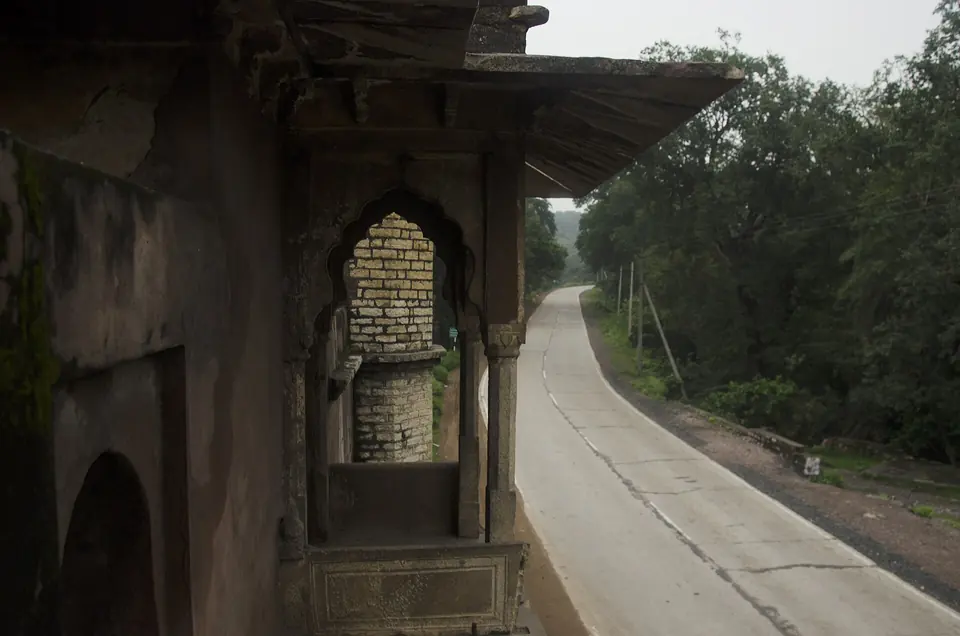
The Mukundara hills take their name from Maharao Mukund Singh of Kota. Before Independence the forests of Kota, Bundi, Jhalawar and Chittorgarh were royal shikargah — hunting reserves managed through a Shikar Khana department, with hunting lodges such as Abli Meeni Mahal and Rawatha Mahal and shooting towers (malas) that still stand in the forest. Tigers ranged through the whole tract.
Darrah was notified as a sanctuary in 1955, but the former rulers kept their hunting rights until 1971–72, and about a hundred tigers are thought to have been shot in Hadoti in the 1950s and 60s. After the Wildlife (Protection) Act of 1972 ended hunting, habitat loss, grazing and poaching finished the job: the reserve's own Tiger Conservation Plan records the last tiger presence in 1978, and a young tiger was reportedly killed near Chhipabarod as late as 1984. Jawahar Sagar Sanctuary followed in 1975 and the National Chambal (Gharial) Sanctuary in 1983, and in 1988 a divisional conference at Kota first proposed a national park for the Hadoti forests.
In April 2003 a young male tiger appeared in the forests around Darrah — the first in a quarter of a century. On 15 July 2003 he was killed by a train on the Delhi–Mumbai line near Darrah. In 2005 photographs matched him to “Broken Tail”, a young male who had gone missing from Ranthambhore about 140 km away. Exactly which hills and river valleys he followed will never be known.
His death proved two things at once: that a corridor between Ranthambhore and Mukundara still worked, and that tigers using it were in danger. Another Ranthambhore wanderer, the tigress T-35, lived in the Kota–Sultanpur forests from December 2009 until her death in March 2016. Their journeys underpinned the case for a tiger reserve, which Rajasthan notified on 9 April 2013 — the state's third.
Before the first tiger arrived, the reserve built an 82 km² enclosure in the Darrah area, with a small 28-hectare soft-release enclosure inside it where a newly arrived tiger could settle before being let into the larger forest. To rebuild the prey base, 1,075 chital were brought in between 2017 and 2024 from zoos and parks including Jaipur, Jodhpur, Kota, Rashtrapati Bhavan and the National Zoological Park in Delhi, Keoladeo National Park in Bharatpur and the A.N. Jha Deer Park, Delhi.
The first reintroduction released three Ranthambhore-born tigers, and a fourth arrived unaided. For a few months in 2020 Mukundara had cubs — then, within weeks, it lost almost everything.
MT-1 T-91 · male
A Ranthambhore male that had wandered into Ramgarh Vishdhari, Bundi; rescued and shifted to the Mukundara enclosure on 3 April 2018.
MT-2 T-106 · female
Translocated from Ranthambhore on 19 December 2018. Gave birth to Mukundara's first cubs in 2020.
MT-3 T-98 · male
Dispersed from Ranthambhore on his own along the Chambal–Kali Sindh corridor via Sultanpur; confirmed on camera traps on 9 February 2019.
MT-4 T-83 · female
Translocated from Ranthambhore on 12 April 2019 and released outside the enclosure. Lived alone for long stretches after 2020.
In the summer of 2020 MT-3 and MT-2 died within eleven days of each other, MT-1 was never seen again after August, and the cubs were lost. MT-4 was left as Mukundara's only tiger. Reviewing those years, the reserve's management shifted later releases away from the original enclosure towards the hills and valleys of the reserve that held better habitat and more prey.
The second phase moved tigers in one or two at a time, used soft-release enclosures, added Rajasthan's first rewilded orphan and, in 2026, its first tiger from another state.
MT-5 T-110 · male
Son of Ranthambhore's T-69; translocated on 3 November 2022. In the April–August 2023 camera-trap survey he was the only tiger recorded.
MT-6 T-2301 · female
Translocated from Ranthambhore on 9 August 2023. Her cub was first sighted in June 2025 and was about 13–14 months old in July 2026.
MT-7 female · rewilded
An orphaned cub of Ranthambhore tigress T-114, raised with minimal human contact at Abheda Biological Park, Kota. Moved to a 5-ha rewilding enclosure in Mukundara on 11 December 2024, to a 21-ha enclosure in February 2026, and hard-released on 28 April 2026 — she made her first wild kill, a sambar, soon after.
MT-8 RBT-2507 · female
Known as “Kankati”; translocated from Ranthambhore on 19 June 2025.
MT-9 T-2408 · male
Born in 2022 in Ranthambhore's Khandar range; brought to Mukundara in January 2026, soft-released in an enclosure and then set free.
MT-10 female · Bandhavgarh
Named “Vindhya”: a 3½-year-old tigress from Bandhavgarh Tiger Reserve, Madhya Pradesh — Mukundara's first inter-state translocation. Hard-released on 7 March 2026.
| ID | Origin ID | Sex | Arrived | How | Status (Oct 2026) |
|---|---|---|---|---|---|
| MT-1 | T-91 | M | 3 Apr 2018 | Rescued from Ramgarh Vishdhari | Missing since 20 Aug 2020 |
| MT-2 | T-106 | F | 19 Dec 2018 | Translocated, Ranthambhore | Died 3 Aug 2020 |
| MT-3 | T-98 | M | 9 Feb 2019 | Natural dispersal from Ranthambhore | Died 23 Jul 2020 |
| MT-4 | T-83 | F | 12 Apr 2019 | Translocated, Ranthambhore | Died 4 May 2023 |
| MT-5 | T-110 | M | 3 Nov 2022 | Translocated, Ranthambhore | In the wild |
| MT-6 | T-2301 | F | 9 Aug 2023 | Translocated, Ranthambhore | In the wild, with cub (b. 2025) |
| MT-7 | T-114's cub | F | 11 Dec 2024 | Rewilded from Abheda Biological Park, Kota | In the wild since 28 Apr 2026 |
| MT-8 | RBT-2507 | F | 19 Jun 2025 | Translocated, Ranthambhore | In the wild |
| MT-9 | T-2408 | M | Jan 2026 | Translocated, Ranthambhore | In the wild |
| MT-10 | — | F | Feb–Mar 2026 | Inter-state, Bandhavgarh (MP) | In the wild |
Dates for MT-1 to MT-8 follow Table 3.1 of the reserve's Tiger Conservation Plan (2025–26 to 2035–36); later events from forest-department statements reported in the press. Status is the latest publicly reported and can change.
Part of the forest is notified as Darrah Sanctuary; the former rulers keep hunting rights until 1971–72.
The reserve's management plan records the last tiger presence in 1978; a young tiger is reportedly killed near Chhipabarod in 1984.
A divisional conference at Kota recommends a national park for the Hadoti forests.
A Ranthambhore male reaches Darrah after ≈ 140 km and is killed by a train in July.
A Ranthambhore tigress lives in the Kota–Sultanpur forests.
Mukundara Hills Tiger Reserve: Mukundara Hills National Park, Darrah and Jawahar Sagar sanctuaries and part of the National Chambal Sanctuary.
Chital releases begin; an 82 km² enclosure is prepared at Darrah.
The first tiger is released into Mukundara.
Two tigresses are translocated; a male walks in from Ranthambhore.
MT-3 and MT-2 die, MT-1 goes missing, the cubs are lost.
The second phase begins with T-110.
MT-4 dies in May; MT-6 arrives in August; Bhainsrorgarh Wildlife Sanctuary is added to the core by order of 5 October 2023; regular jungle safaris open for visitors.
The orphan from Abheda Biological Park begins rewilding in Mukundara.
MT-6's cub is sighted in June; MT-8 “Kankati” arrives on 19 June.
A male from Ranthambhore and “Vindhya”, the first tigress from another state.
Rajasthan's first rewilded tigress is hard-released.
Two males, four females and a cub. More tigresses are planned after the monsoon.
Under the national Phase IV monitoring protocol, the reserve ran a camera-trap survey from April to August 2023 with 185 camera traps over about 5,408 trap-nights. They recorded 26 wild species and 13 kinds of carnivore — but only one tiger, MT-5, in seven independent detections. The same survey shows why prey and grazing matter so much here: cattle were photographed far more often than any wild animal.
Camera-trap detections per 100 trap-nights, Phase IV 2023
Source: Tiger Conservation Plan, MHTR, Table 3.3 (Phase IV, summer 2023). A relative index, not a population count.
Leopards were Mukundara's top predator for four decades and remain its most numerous big cat. Sloth bears, striped hyenas, Indian wolves, golden jackals, foxes, jungle and desert cats and the ratel (honey badger) complete the carnivore guild. See the wildlife guide →
Mukundara is planned as a home for tigers dispersing from Ranthambhore and, in time, a link towards Madhya Pradesh. The reserve's corridor plan identifies four routes:
Highways, the Delhi–Mumbai railway, mining around Dabi and grazing pressure are the main breaks in these links — which is why the reserve now moves tigers in directly while the corridors are restored.
Yes — on a forest-department tiger safari by open jeep or canter from the Darrah and Kolipura ranges, about an hour from Kota. Sightings have risen steadily since 2025, though no wild tiger is ever guaranteed. The reserve's plan closes the core to visitors from July to September and requires a registered nature guide in every safari vehicle.
Seven by mid-2026: two males (MT-5 and MT-9), four females (MT-6, MT-7, MT-8 and MT-10) and a cub born to MT-6 in 2025. More tigresses are due to be translocated after the 2026 monsoon.
The first tiger, MT-1 (T-91), was released on 3 April 2018. Three more followed by April 2019, but by 2020 most had died or gone missing. A second phase began on 3 November 2022 with MT-5 and has continued with MT-6 to MT-10.
A young male tiger from Ranthambhore who travelled about 140 km to Darrah in 2003 — the first tiger in Mukundara in a quarter of a century — and was killed by a train on 15 July 2003. His journey helped make the case for the tiger reserve.
MT-3 died on 23 July 2020 and MT-2 on 3 August 2020; MT-1 has been missing since 20 August 2020, and MT-2's cubs were lost. MT-4 survived alone until she died on 4 May 2023.
MT stands for Mukundara Tiger. Each tiger gets the next MT number when it arrives, alongside its original ID — for example MT-5 was T-110 in Ranthambhore.
Most came from Ranthambhore Tiger Reserve. MT-3 walked in on his own; MT-7 was an orphaned Ranthambhore cub raised at Abheda Biological Park, Kota; and MT-10 came from Bandhavgarh Tiger Reserve in Madhya Pradesh — Mukundara's first inter-state tiger.
Read the full story in Hindi on About Mukundara (मुकुन्दरा में बाघों की वापसी), and the ecology and research background on Science & Research. Page updated 21 October 2026.

Talk to us
Tiger safari by jeep or canter, a Chambal boat safari, wildlife trails or a heritage and rock-painting visit — send your dates and group size by WhatsApp, phone or email and we'll help you plan it.